


The Countryside Stewardship Training Fund's decision to support both PDS1 and the Deer Management Certificate Level 3 (DMC3) raises an interesting question about the future of professional deer management in the UK. Why has the fund selected these qualifications, and what might its decision tell us about the direction in which the industry is heading?
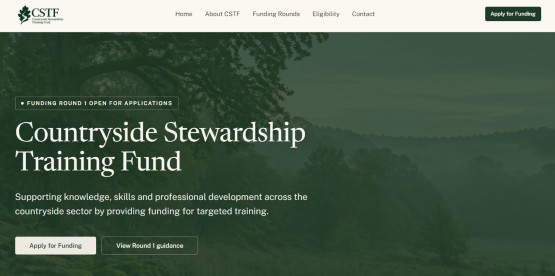
The Countryside Stewardship Training Fund (CSTF) has opened a new funding round, offering up to £60,000 towards professional development across the countryside sector. Among its selected qualifications are the Proficient Deer Stalking Certificate Level 1 (PDS1) and the Deer Management Certificate Level 3 (DMC3).

The selection is noteworthy. One is an entry-level qualification, designed to establish a foundation of safe and competent deer stalking. The other is a higher-level qualification intended to recognise a much broader range of knowledge, professional development and practical experience.
Taken together, these choices suggest an interest not only in bringing new people into deer management, but also in developing the competence of those already working in the sector.
Why is a Level 3 deer-management qualification needed?
The demands placed on professional deer managers are changing. Deer management is increasingly connected to woodland resilience, biodiversity, agricultural interests, nature recovery and wider land-management objectives.
It is no longer simply a question of demonstrating that someone can safely and competently shoot a deer. Professional deer management also involves understanding populations, assessing impacts, planning interventions, evaluating outcomes and working towards sustainable management objectives.
Government policy is increasingly reflecting these wider responsibilities. Defra's 2026 Deer Impacts Policy Statement identifies the need to develop skills and capacity through qualifications, mentoring and continuing professional development. Natural England's licensing framework also places emphasis on recognised qualifications and demonstrable practical competence.
These developments form part of a broader shift towards more structured evidence of professional capability. As expectations develop, it is reasonable to anticipate that the industry will need to consider what competence beyond the established Level 2 standard should look like.
A recognised Level 3 qualification is a logical progression. Indeed, the question may increasingly become not whether deer management needs a higher level of professional development, but how that standard should be established and recognised.
What is DMC3?
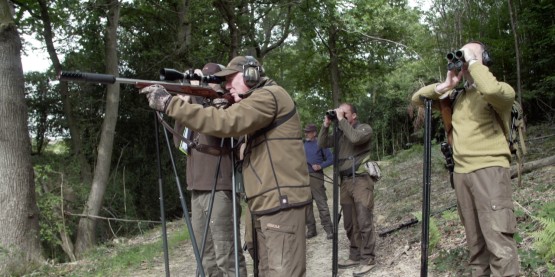
The Deer Management Certificate Level 3 is a 40-credit qualification designed to recognise a combination of prior learning, continuing professional development, practical deer-culling experience and strategic deer-management ability.
It is structured around four units:
- Unit 1 – Knowledge, prior learning and CPD (15 credits): recognising relevant qualifications, courses, academic study and professional training.
- Unit 2 – Invasive deer species (10 credits): verified practical culling experience.
- Unit 3 – Non-invasive deer species (10 credits): verified practical culling experience.
- Unit 4 – Deer Management Plan (5 credits): preparing a structured management plan for a real area of land.
One of the most important features is Unit 1. DMC3 does not require candidates to have followed one particular training pathway or obtained all their experience from one provider.
Candidates entering with either PDS2 or DSC2 can progress towards the qualification. Their previous learning and professional development can then be assessed for relevant credits.
This includes recognised training and qualifications from organisations such as BASC, the British Deer Society (BDS), the National Gamekeepers' Organisation (NGO), DMQ and LANTRA, alongside relevant university courses, degrees, diplomas and other academic or vocational awards.
For example, relevant deer-management courses and specialist training delivered by BASC, BDS and NGO, including deer management, best practice, night shooting, Large Game Meat Hygiene, deer impacts and other aspects of professional deer management, may contribute towards Unit 1.
The list is not intended to be exhaustive. Other relevant training and qualifications can be considered for recognition.
This is an important distinction. DMC3 recognises that professional knowledge and experience have been developed across the industry by numerous organisations and educational providers. Its purpose is to bring that learning together within a structured higher-level qualification, rather than favouring one existing qualification pathway.
Further details are available from the Shooting & Hunting Academy DMC3 course page.
Why has CSTF also selected PDS1?
The selection of PDS1 alongside DMC3 is equally interesting.
The UK has two established entry-level deer-stalking qualification pathways, PDS1 and DSC1, both recognised within Natural England's basic qualification framework.
PDS1 has been developed as an accredited, end-to-end qualification, combining online theoretical learning, formal assessment and a practical assessment of firearms handling and shooting competence. It also incorporates the Large Game Meat Hygiene Certificate, including a practical element.
These features may help explain why PDS1 was considered suitable for support through CSTF. Its combination of theoretical knowledge, practical assessment and wider venison-hygiene training provides a structured introduction to responsible deer stalking and the handling of wild game.
That is a possible explanation rather than a stated reason from CSTF. Nevertheless, it illustrates how entry-level training can contribute to wider professional development.
For eligible candidates, CSTF is contributing 50% of the approved PDS1 online theory fee, with practical assessment costs paid separately.
What might this mean for the industry?
The significance of CSTF's decision may extend beyond the immediate financial support available to candidates.
By supporting PDS1 and DMC3, the fund is recognising two different but complementary requirements: developing new entrants and providing a higher-level progression route for experienced practitioners.
The wider policy environment is placing increasing emphasis on skills, qualifications, practical experience and demonstrable competence. The development of a recognised Level 3 qualification is therefore a timely response to the challenges facing the sector.
DMC3 is particularly interesting because it brings together the established PDS and DSC pathways while recognising relevant learning from across the wider industry. This is why DMC3 is proving to be an inclusive progression route for professional deer managers, recognising candidates from different qualification pathways and valuing the knowledge and experience they have gained across the industry.
It would be premature to predict precisely how future qualification or licensing arrangements will develop. However, the direction of travel suggests that the ability to demonstrate higher levels of professional knowledge, experience and management competence is likely to become increasingly important.
CSTF's decision to support DMC3 may therefore be more significant than simply providing funding for another qualification. It is an investment in the next stage of professional deer management.
For experienced stalkers, land managers and countryside professionals, it may be time to start thinking beyond Level 2.
Find out more: CSTF Funding Round 1 – eligibility and application details.


